How Do You Calculate the Calories in a Homemade Recipe?
The reliable way to get calories for a homemade dish: weigh ingredients, use USDA data, divide by servings — or let our free analyzer do it in seconds.
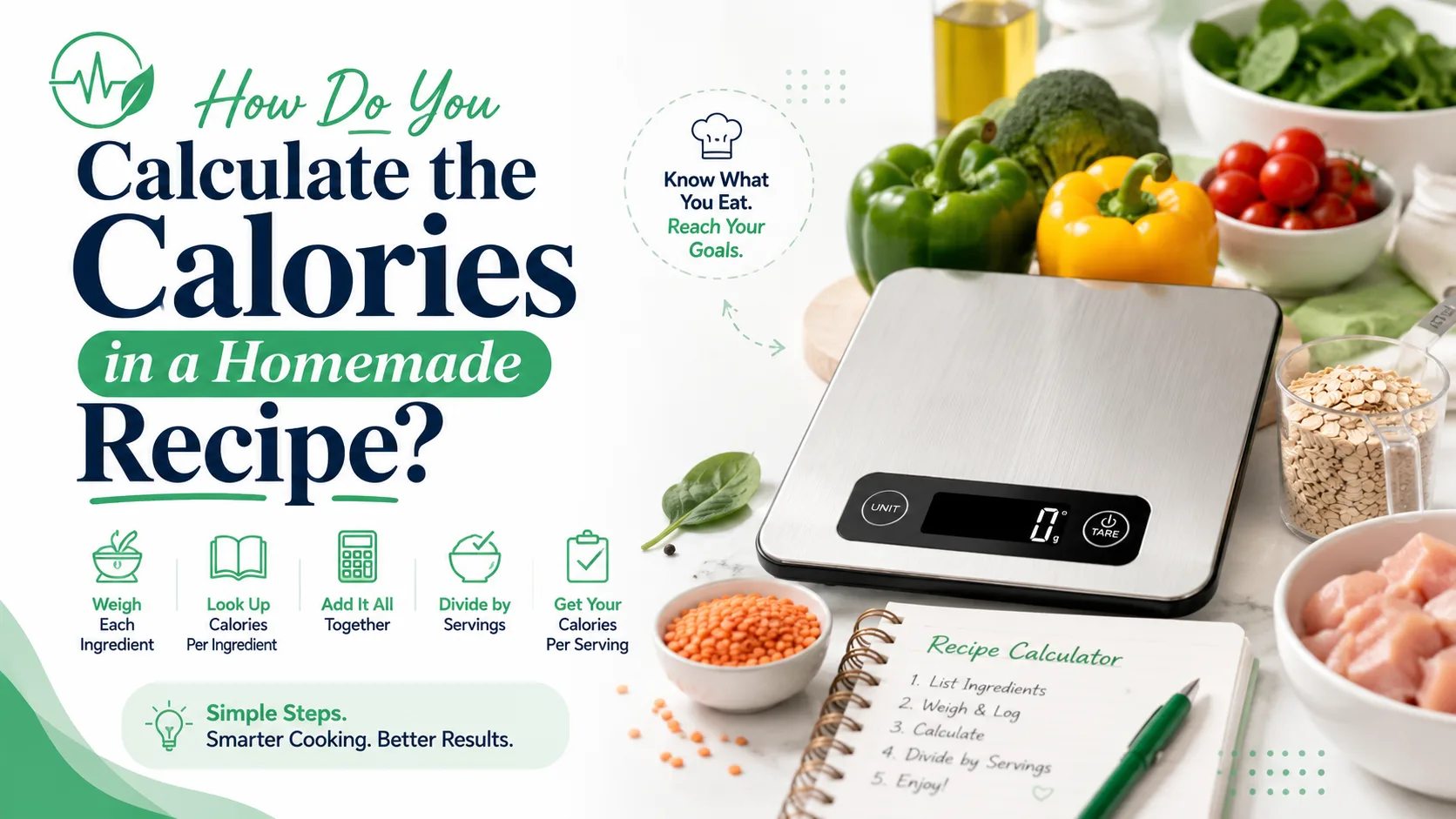
Every homemade recipe has a calorie count — it's just hidden across ten ingredients and a messy kitchen scale. The math itself is simple: convert each ingredient to grams, look up its nutrition in the USDA FoodData Central database, add everything up, and divide by servings. The tedious part is the lookups and conversions, which is exactly what this tool automates.
What's the manual method, step by step?
If you want to do it by hand, you need three things: a kitchen scale, the USDA FoodData Central database (it's free and public), and fifteen patient minutes. First, weigh each ingredient in grams — raw, as it goes into the pot. Second, search FoodData Central for the closest generic match ("chicken breast, raw" beats a brand name) and note the calories, protein, carbs, and fat per 100 g. Third, scale each ingredient's values to your actual weight, total the columns, and divide by how many servings the dish makes. That last step is where most home counts go wrong — a "serving" defined as one-sixth of the pot only works if you actually eat one-sixth of the pot.
Why don't my numbers match the package label?
Because you're comparing two different measurement systems. Package labels come from the manufacturer's own formulation and serving-size assumptions under FDA labeling rules; database values describe generic versions of foods. Both can be right and still disagree. For a homemade dish built from whole ingredients, USDA generic data is the more honest reference — but if half your recipe is a specific branded sauce, the label on that jar is the better number for that ingredient.
How do household measures convert to grams?
| Household measure | Typical weight |
|---|---|
| 1 cup uncooked white rice | about 185 g |
| 1 tablespoon olive oil | about 14 g |
| 1 medium egg | about 44 g without shell |
| 1 cup chopped onion | about 160 g |
Volume-to-weight conversion is the biggest source of error in recipe math. A "cup of flour" can swing 20% depending on how it's scooped. Weights above are typical USDA portion values — useful defaults, but when accuracy matters, the scale always beats the cup. Our analyzer flags every converted measurement with a badge so you know which numbers are approximations.
Does cooking change the numbers?
Cooking changes weight more than it changes calories. Rice triples in weight as it absorbs water; meat loses water and shrinks. The calories mostly stay, but the per-gram density changes completely — 100 g of cooked rice is far lighter in calories than 100 g of dry rice. The fix is to be explicit: enter "1 cup cooked rice" rather than "1 cup rice", because USDA carries separate entries for raw and cooked forms. Oil is the other trap: marinades and frying oil only partially end up in the food, so drained dishes usually land below the calculated total.
What can you do with a per-serving number?
Once a recipe has a real per-serving count, it plugs into everything else. If you're tracking macros for a low-carb approach, the keto calculator turns your calorie target into daily fat, protein, and carb grams you can check recipes against. And if certain meals leave you bloated or tired, logging the dish in a food and symptom diary alongside its ingredients makes patterns much easier to spot.
How accurate should you expect any of this to be?
- Generic whole ingredients with weighed amounts: typically within 10–20% of lab analysis
- Volume measures instead of weights: add another meaningful margin of error
- Branded or restaurant-style ingredients: use the actual product label instead
- Missing nutrient values (a dash) mean "not reported", never zero — fiber and sugar are the usual gaps
Treat every recipe count — manual or automated — as a good estimate, not a lab report. Estimates are plenty for planning meals, comparing two dinner options, or keeping a week roughly on target.
Medical disclaimer This article and the Recipe Nutrition Analyzer are for general education, not medical or dietary advice. If you need precise nutrition data for a medical condition, work with a registered dietitian or your clinician.