How to Build a High-Protein Meal Plan You’ll Actually Follow
A good meal plan starts with calories, locks in protein, and stays flexible enough to actually follow. Here’s the framework — plus a free generator.
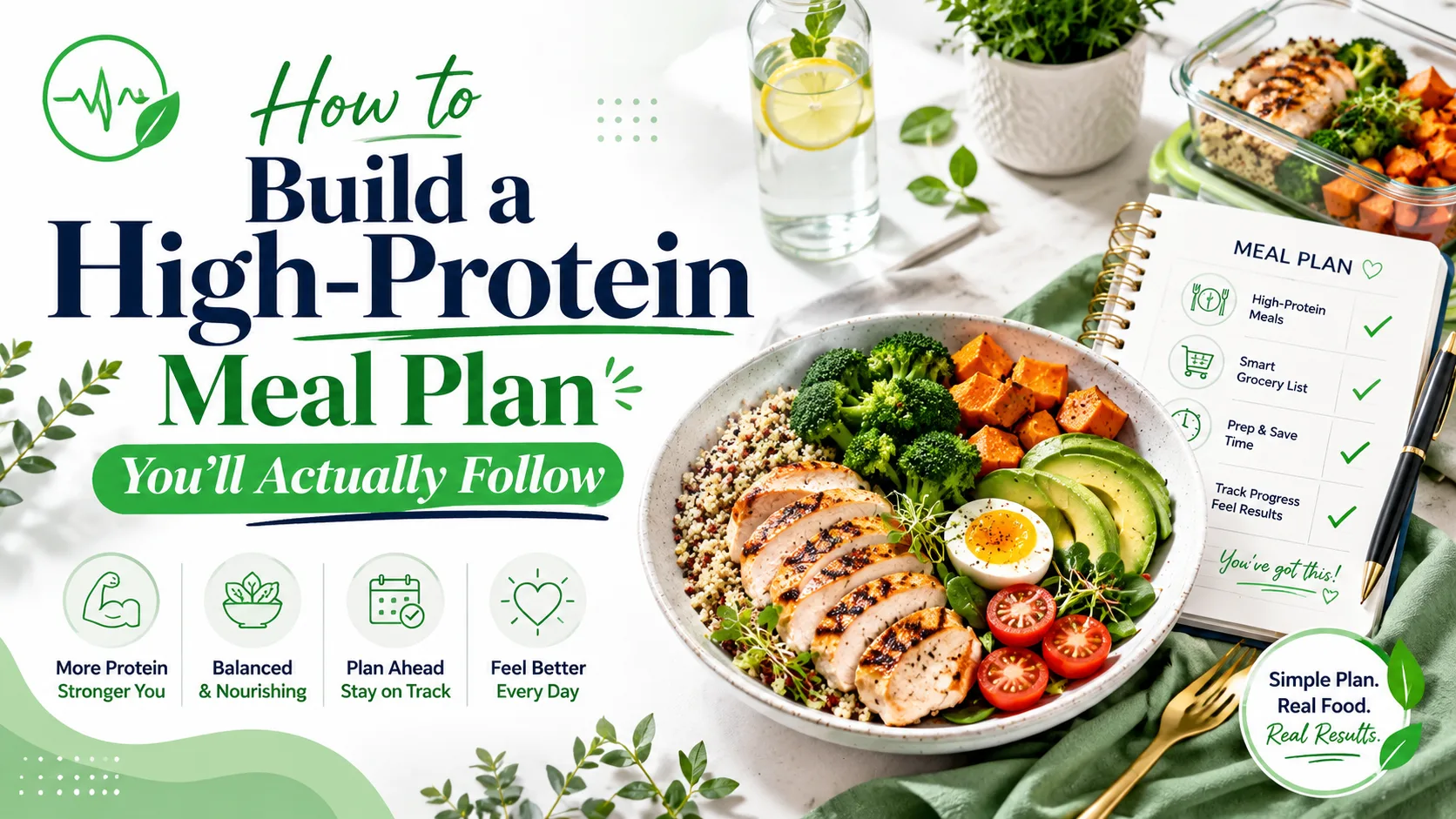
A solid meal plan starts with your daily calorie target, then locks in protein — about 1.6–2.2 grams per kilogram of body weight if you’re active — and fills the rest with carbs and fats you enjoy. Spread protein across three or four meals, plan around foods you’ll actually eat, and leave a little room for flexibility.
How do you build a meal plan from scratch?
You don’t need an app or a dietitian to start. Five steps cover it:
Prefer to skip the math? The generator does all five steps from your targets and diet style:
How much protein should each meal have?
Muscle responds best to protein spread out rather than dumped into one meal. Aim for roughly 0.4 g per kg of body weight per meal — about 25–40 g for most people — enough to cross the "leucine threshold" that triggers muscle repair. Here’s how a high-protein day around 2,000 calories can look:
How do you make a meal plan you’ll actually stick to?
- Repeat breakfasts and snacks — save the variety for lunch and dinner.
- Batch-cook proteins and grains once or twice a week.
- Leave 10–15% of calories for treats so the plan survives real life.
- Shop from your list to avoid impulse buys.
The best plan is rarely the "optimal" one. Near-perfect adherence to a slightly imperfect plan beats perfect macros you abandon by Wednesday. Build for your real schedule, not an ideal one.
Should you plan differently for weight loss or muscle gain?
The structure is identical; only the calorie target moves. For fat loss, eat below maintenance and keep protein high to protect muscle — see how to keep muscle while losing weight. For muscle gain, eat a slight surplus. The Macro Calculator sets carbs and fat around your protein either way.
How many meals a day should I eat to lose weight?
Total calories matter far more than meal count. Three to four meals suits most people — choose the number that keeps you full and consistent.
Is meal prep worth it?
For most people, yes. Prepping even one or two components (a protein and a grain) removes daily decisions and makes hitting your targets far easier.
How do I hit my protein target?
Anchor every meal with a protein source, use Greek yogurt or a shake to close gaps, and read labels by grams of protein per serving.
Can I eat the same meals every day?
Yes. Repetition makes planning and shopping easier — just cover protein, plenty of vegetables, and enough variety to stay interested.
Do I have to count calories forever?
No. Most people track for a few weeks to learn portion sizes, then maintain with awareness rather than weighing everything.