How Do You Calculate Alcohol Units in Your Drinks?
Learn the exact formula for alcohol units, how UK units compare to US standard drinks, and what it means for your weekly limits and calories.
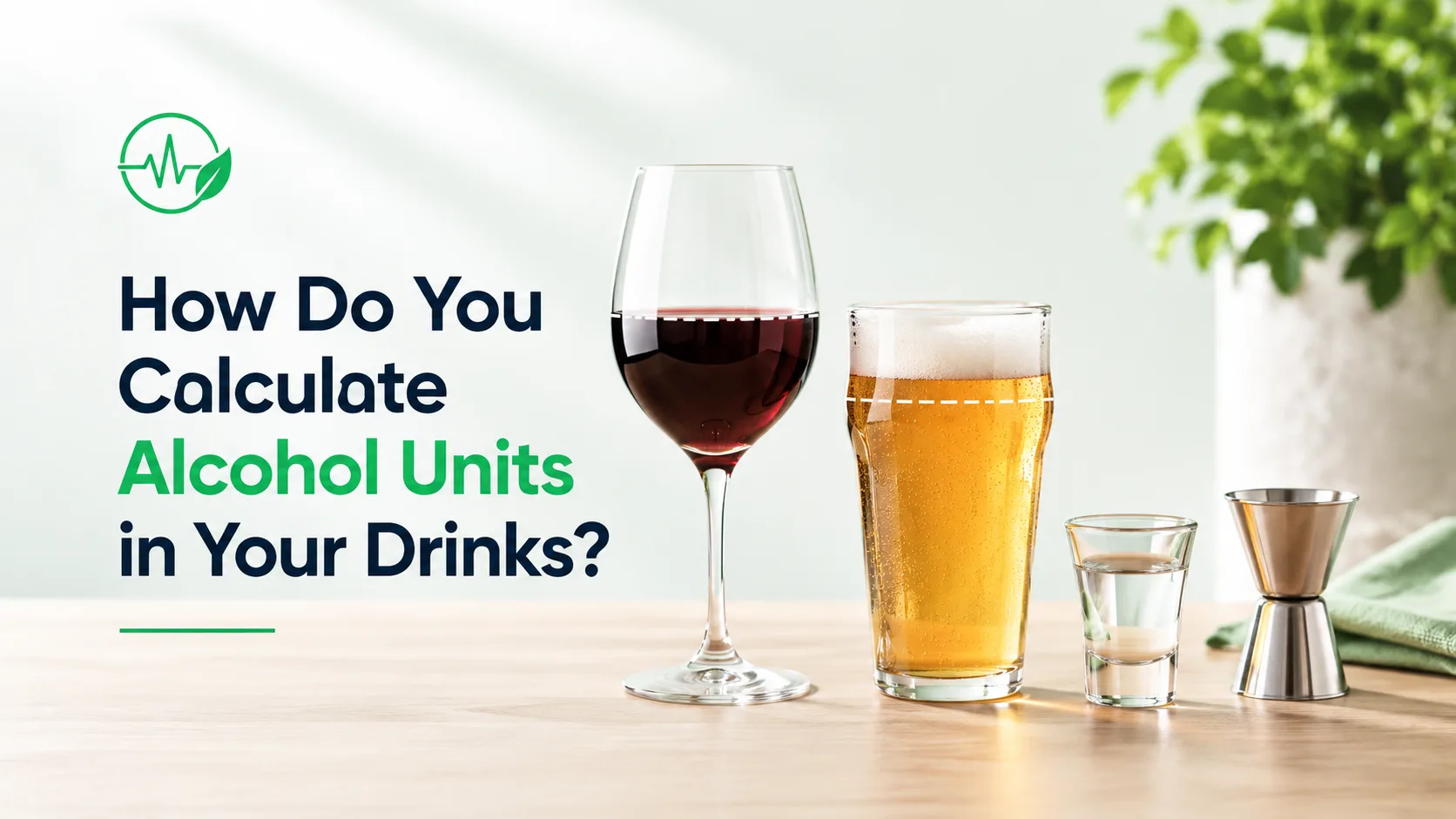
A standard 175 mL glass of 13% wine isn't one drink, it's 2.3 UK units, or about 1.3 US standard drinks. Most people track alcohol by counting glasses, not grams of ethanol, and that habit routinely undercounts real weekly intake by 30% or more. The math behind the number is simple, and once you know it, every calorie count on a drinks menu looks different.
- One UK unit equals 10 mL (8 g) of pure alcohol; a US standard drink is 14 g, about 1.75 times more.
- NHS low-risk guidance caps both men and women at 14 units per week, spread across three or more days (NHS, 2023).
- Pure alcohol supplies 7 kcal per gram, so a 175 mL glass of 13% wine adds roughly 126 kcal from alcohol alone.
- CDC defines binge drinking as 4+ drinks for women or 5+ for men within about two hours (CDC, 2024).
How Do You Calculate Alcohol Units?
You calculate a UK alcohol unit by multiplying the drink's volume in milliliters by its ABV percentage, then dividing by 1,000. A 250 mL glass of 12% wine works out to (250 × 12) ÷ 1,000 = 3 units. The US measures differently: a standard drink there equals 14 grams of pure alcohol, about 1.75 times one UK unit, so the two figures are never interchangeable without converting first.
The gram-based version matters more once calories enter the picture. Pure alcohol has a density of 0.789 grams per milliliter, so a 175 mL glass of 13% wine holds about 18 grams of ethanol, roughly 2.3 UK units or 1.3 US standard drinks. At 7 calories per gram, that's about 126 calories from alcohol alone, before counting residual sugar in the wine or anything mixed with a spirit. Alcohol counts as neither protein, carb, nor fat, so see how it fits into your daily macro targets before you assume a glass of wine doesn't count toward your nutrition goals.
Is a UK Alcohol Unit the Same as a US Standard Drink?
No. A UK unit is 10 mL (8 grams) of pure alcohol, while a US standard drink is defined by the NIAAA as 14 grams, about 75% more alcohol per drink (NIAAA, 2024). That mismatch means a British guideline of 14 units a week is not 14 American drinks, it's closer to 8 US standard drinks worth of total alcohol. Confusing the two systems is the most common measurement error in alcohol tracking.
Reference drinks are also defined differently on each side of the Atlantic. A US standard drink assumes 12 oz of 5% beer, 5 oz of 12% wine, or 1.5 oz of 40% spirit, each landing near 14 grams of alcohol. A UK unit, by contrast, scales directly with whatever ABV and pour size sits in your actual glass, which is why a strong 15% natural wine can quietly contain 50% more alcohol than a standard 12% pour of the same size.
How Many Units Are in a Glass of Wine, Beer, or a Shot of Spirits?
A standard 175 mL glass of 13% wine is about 2.3 units, a pint (568 mL) of 4% beer is about 2.3 units too, and a single 25 mL shot of 40% spirit is exactly 1 unit. Because units scale with both volume and ABV, doubling either number roughly doubles the total, so a large 250 mL wine at 13% jumps to 3.25 units, not 2.3.
- Wine, 175 mL, 13% ABV: about 2.3 units (1.3 US standard drinks)
- Beer, pint (568 mL), 4% ABV: about 2.3 units (1.3 US standard drinks)
- Spirit, single shot (25 mL), 40% ABV: 1 unit (0.7 US standard drinks)
- Champagne, 125 mL flute, 12% ABV: about 1.5 units (0.85 US standard drinks)
How Many Alcohol Units Per Week Are Considered Safe?
The NHS recommends no more than 14 units per week for both men and women, spread across three or more days with several alcohol-free days included (NHS, 2023). The US framework differs: the Dietary Guidelines for Americans define moderate drinking as up to 1 drink per day for women and 2 for men, while NIAAA's low-risk thresholds cap women at 7 drinks weekly (3 per occasion) and men at 14 weekly (4 per occasion). Going over either single-occasion limit counts as risky drinking even when your weekly total looks fine. Compare your total to your BMR calculator baseline and track trends with a BMI calculator to see what share of your daily energy budget alcohol takes up on drinking days.
Why Do Alcohol Calories Hurt Weight Loss More Than Food Calories?
Alcohol calories are metabolically different, not just numerically added. Your liver treats ethanol as a priority fuel and pauses fatty acid metabolism to clear it first, so the 126 calories in that glass of wine don't just add to your daily total, they also delay fat-burning for several hours afterward. This is the mechanism most calorie-counting advice skips when it lists alcohol as simply '7 calories per gram.'
Mixers stack sugar calories on top of this delay, and snacks eaten while drinking rarely get logged accurately. Two glasses of wine most nights can add 1,700-plus calories a week without touching food at all, run the numbers through a calorie deficit calculator to see how much that shifts your weekly target. Treat each drink as roughly 100-150 calories plus several hours of stalled fat-burning, not just a line item.
What Should You Actually Do With Your Weekly Unit Count?
If your weekly total lands under 14 units (UK) or under 7-14 US standard drinks depending on sex, with no single-occasion binge, you're within low-risk guidelines, and the priority becomes spacing drinks across the week rather than the total alone. If you're actively cutting weight, budget alcohol like any other calorie source: log it before you drink, not after, and expect the scale to move slower on weeks with three or more drinking occasions even when your unit count technically qualifies as safe.
Track body composition alongside your unit log, since alcohol shifts water weight and can mask real fat loss on the scale for days. A body fat percentage calculator and an ideal weight calculator give a steadier trend line than daily weigh-ins when drinking habits fluctuate. Realistic expectation: cutting three drinking occasions a month typically saves 1,500 to 2,500 calories, close to a full day of eating.
People Also Ask
Here are quick, standalone answers to the questions people ask most often about tracking alcohol units and standard drinks.
Medical disclaimer This article is for general education and does not replace personalized medical advice. If you're concerned about your drinking habits, talk to your primary care physician or contact the SAMHSA National Helpline at 1-800-662-4357.