What Is an Anti-Inflammatory Diet? Foods to Eat and Limit
An anti-inflammatory diet isn't a product — it's a pattern: vegetables, fruit, fish, nuts, olive oil, and less ultra-processed food. See where you stand.
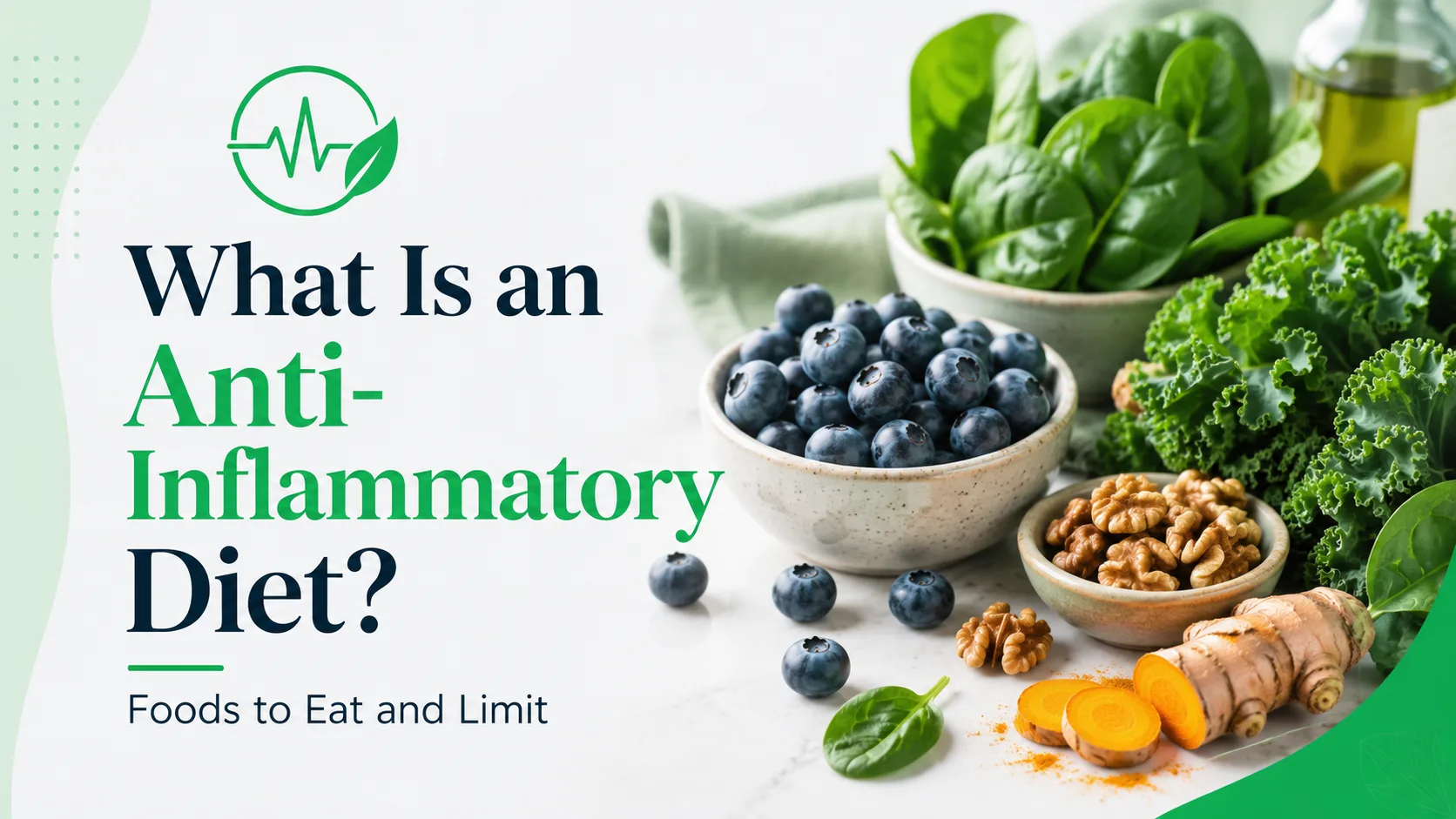
Strip away the marketing and an anti-inflammatory diet is simply a recognizable pattern: plants in abundance, fish and legumes over processed meat, olive oil over industrial fats, and as little ultra-processed food as your real life allows. No single "superfood" makes a diet anti-inflammatory, and no single dessert breaks one. What matters is the weekly pattern — which is exactly what the score below measures.
What does inflammation have to do with food?
Inflammation is your immune system's normal response to injury and infection — short-lived and useful. The concern is the low-grade, long-running kind, which researchers have linked to patterns in diet, activity, sleep, and stress. Food is one lever among several, and the research points consistently in the same direction: eating patterns heavy in plants, fiber, and unsaturated fats travel with better long-term health outcomes than patterns heavy in ultra-processed food. That's the honest claim — a pattern-level association, not a promise that any one meal changes your blood work. That pattern-level association shows up most consistently for cardiovascular outcomes — the strongest evidence for plant-forward, unsaturated-fat eating sits squarely in heart health.
Which foods anchor the pattern?
- Vegetables and fruit — WHO's healthy-diet guidance suggests at least 400 g (about five servings) a day
- Oily fish like salmon and sardines, plus legumes as protein staples
- Nuts, seeds, and extra-virgin olive oil as the main fat sources
- Whole grains over refined grains
- Herbs, spices, coffee, and tea — flavor without added sugar
What gets trimmed back?
Not eliminated — trimmed. Ultra-processed foods (packaged snacks, sweetened drinks, reconstituted meats) are the biggest category, alongside added sugars, refined grains, and heavy alcohol. If that list sounds familiar, it should: it overlaps almost perfectly with general healthy-eating advice from WHO and the Dietary Guidelines. "Anti-inflammatory" is less a separate diet than a well-marketed name for the pattern nutrition science keeps arriving at. The Mediterranean way of eating is its best-known real-world example.
How does the score work — and what it can't tell you
The tool above asks about your typical week — how often vegetables, fish, nuts, and olive oil show up, and how often ultra-processed food does — and scores the pattern against the principles on this page. It's transparent arithmetic, not a lab test: it cannot measure the inflammation in your body (that takes blood work a clinician orders). What it can do is show you, concretely, which one or two swaps would move your week most.
Where should you actually start?
Pick the swap that costs you the least willpower. Sweetened drinks to sparkling water or coffee. The afternoon packaged snack to a handful of nuts. One processed-meat dinner a week to a fish or bean one. Boring advice, but the pattern-level evidence favors consistency over intensity — and your gut tends to benefit from the same fiber-forward swaps, which is why this score and the gut health score often move together. Food is also just one habit among several: the healthspan score shows how your eating pattern sits alongside sleep, movement, and the rest.
Medical disclaimer General education, not medical advice. If you have an inflammatory condition or are changing your diet to manage symptoms, work with your doctor or a registered dietitian — dietary changes complement medical care, they don't replace it.