What Do Your Blood Pressure Numbers Mean? (Age Guide)
Systolic and diastolic numbers each tell a different story about your heart. Here's what your reading means, by category and age.
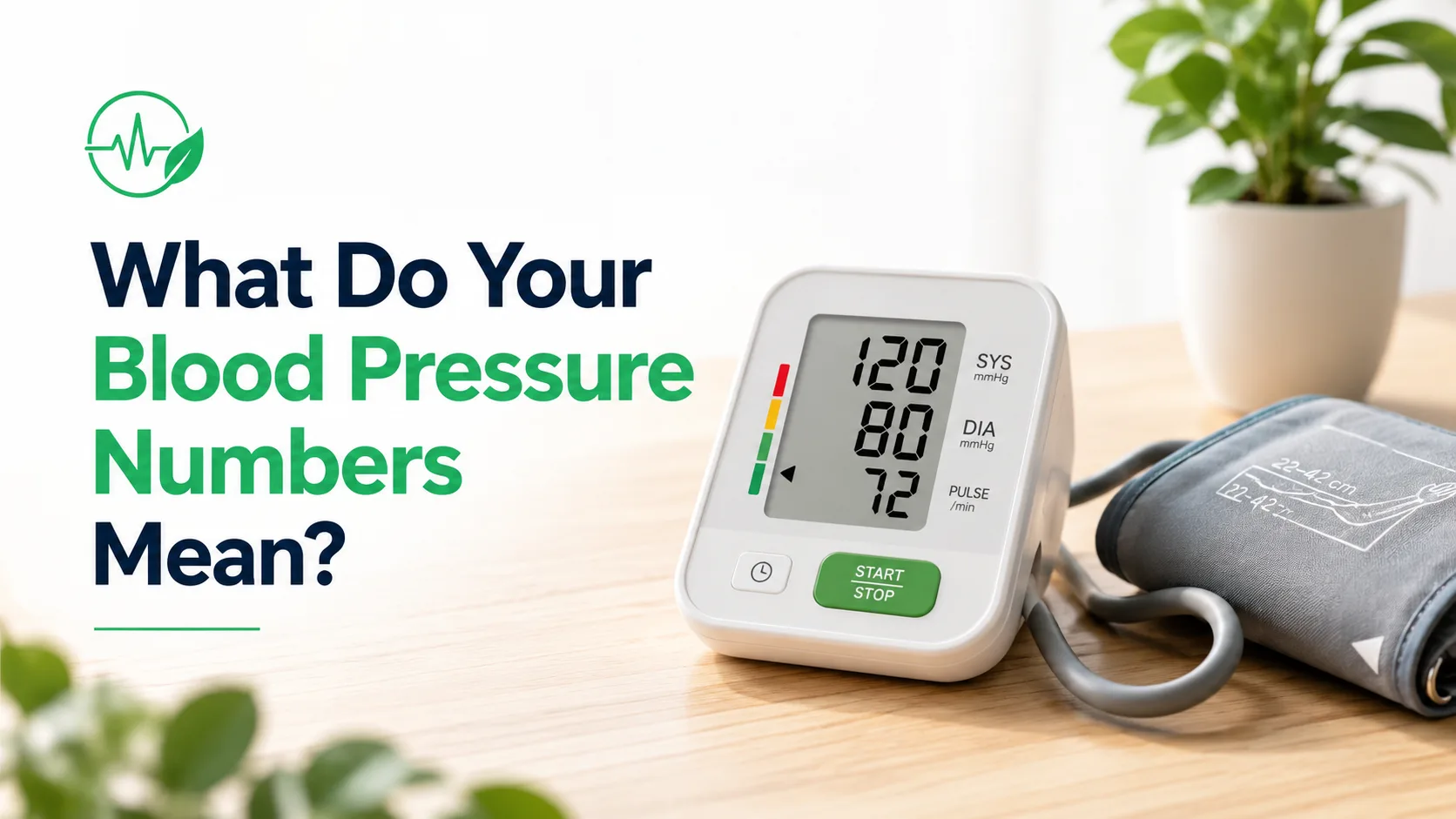
Normal blood pressure is anything below 120/80 mmHg, and once you cross 130/80 you've entered Stage 1 hypertension territory, according to the American Heart Association. Most people staring at a home monitor's readout have no idea which number matters more, or that one high reading rarely means anything on its own. A single elevated reading after climbing three flights of stairs proves nothing; a pattern across several days does.
- Normal blood pressure is below 120/80 mmHg; Stage 1 hypertension starts at 130/80 mmHg (AHA, 2024).
- Systolic (top number) measures pressure when the heart beats; diastolic (bottom) measures pressure between beats.
- About 46% of US adults have hypertension, and nearly half don't know it (CDC, 2024).
- Low blood pressure is generally defined as below 90/60 mmHg, though symptoms matter more than the number alone.
What Do Your Blood Pressure Numbers Mean?
The top number, systolic pressure, measures the force in your arteries when your heart contracts and pushes blood out. The bottom number, diastolic pressure, measures the force between beats, when the heart relaxes and refills. A reading of 118/76 mmHg means your arteries see 118 mmHg of pressure at the peak of each heartbeat and 76 mmHg during the pause between beats. Both numbers matter, but after age 50, systolic pressure becomes the stronger predictor of heart disease risk because arteries stiffen over time (NHLBI, 2024).
What Is a Normal Blood Pressure Range by Age?
For adults 18 and older, the American Heart Association uses one universal threshold: below 120/80 mmHg counts as normal at any age, from 25 to 75. What changes with age isn't the target, it's the average. Systolic pressure tends to creep up 5-10 mmHg per decade after 40 as arteries lose elasticity, so a reading of 128/78 mmHg is more common at 65 than at 30, even though both technically land in the elevated category. Children and teens are scored against height and age percentiles instead of fixed numbers, so pediatric readings belong on a pediatrician's chart, not this one. If extra weight is part of the picture, a quick check with a BMI calculator can show whether weight is contributing to your numbers.
What Counts as High Blood Pressure? (Hypertension Stages Chart)
High blood pressure starts at 130/80 mmHg under the current AHA guideline, split into two stages before a hypertensive crisis. Stage 1 runs from 130-139 systolic or 80-89 diastolic; Stage 2 starts at 140/90; anything above 180/120 is a hypertensive crisis needing immediate medical attention. About 46% of US adults meet the criteria for hypertension, and nearly half don't know it yet (CDC, 2024).
- Normal: below 120/80 mmHg
- Elevated: 120-129 systolic, under 80 diastolic
- Stage 1 Hypertension: 130-139 systolic or 80-89 diastolic
- Stage 2 Hypertension: 140+ systolic or 90+ diastolic
- Hypertensive Crisis: above 180 and/or above 120 — seek emergency care
Elevated blood pressure often travels with a resting heart rate creeping upward too. Pair your readings with a target heart rate calculator to see whether your cardio training zones need adjusting as your numbers shift.
Why Might Your Home Blood Pressure Reading Be Wrong?
The biggest measurement error is taking a reading right after talking, walking, or with a full bladder, any of which can inflate systolic pressure by 10-15 mmHg. Wrong cuff size is the second most common mistake: a cuff too small for your arm can overstate your reading by 10 mmHg or more, while one that's too loose understates it. Sit still for five minutes first, feet flat, back supported, arm at heart level. Check twice, a minute apart, and average the two.
There's also white coat hypertension, readings that spike in a clinical setting but normalize at home, and its mirror image, masked hypertension, where office readings look fine but home numbers run high. Both are common enough that one office visit is not a reliable diagnosis; the AHA recommends confirming any high reading with several days of home monitoring before treating it as real (AHA, 2024). Track your numbers consistently with the blood pressure checker so you're comparing your own trend, not a single snapshot.
What Is Low Blood Pressure, and Is It Ever Dangerous?
Low blood pressure, or hypotension, is generally defined as a reading below 90/60 mmHg, though the number alone doesn't determine danger, symptoms do. Dizziness, fainting, blurred vision, or fatigue alongside a low reading warrant a doctor's visit; a naturally low, symptom-free reading in a fit, active adult usually isn't a concern. Dehydration is one of the most common and fixable causes, since lower blood volume means less pressure pushing against artery walls. If you're chronically under-hydrated, checking your intake against a daily water intake calculator is a faster fix than most people expect.
What Should You Actually Do With These Numbers?
If your average home reading sits under 120/80 mmHg across a week of checks, keep doing what you're doing and recheck monthly. If you're landing in the 130/80-139/89 range, that's Stage 1: most guidelines call for lifestyle changes first, over a 3-6 month trial, unless you already have diabetes or heart disease. Anything at or above 140/90 on repeated readings, or a single reading above 180/120, means a call to your doctor, not a wait-and-see approach.
Track three things weekly: your average reading, your resting heart rate, and your weight trend, since all three tend to move together. A metabolic age calculator is a useful gut-check for whether your cardiovascular system is aging faster or slower than your birth certificate suggests, and it's a solid motivator when the blood pressure numbers alone don't feel urgent yet. Sodium reduction, 150 minutes of weekly moderate exercise, and cutting back on alcohol are the three levers with the strongest evidence behind them. Expect systolic pressure to move 5-10 mmHg within a few weeks of consistent changes, not months.
People Also Ask
Quick, standalone answers to the questions people ask most often after checking their blood pressure.
Medical disclaimer This tool offers general education and is not a diagnosis. If your readings are consistently elevated, or you experience chest pain, severe headache, or shortness of breath, contact your doctor immediately or call 911. For ongoing concerns, consult your primary care physician or a cardiologist.