How Much Caffeine Is Too Much in a Day?
Learn what 400 mg of caffeine per day really means, how to total coffee and energy drinks, and when a lower limit may be wiser.
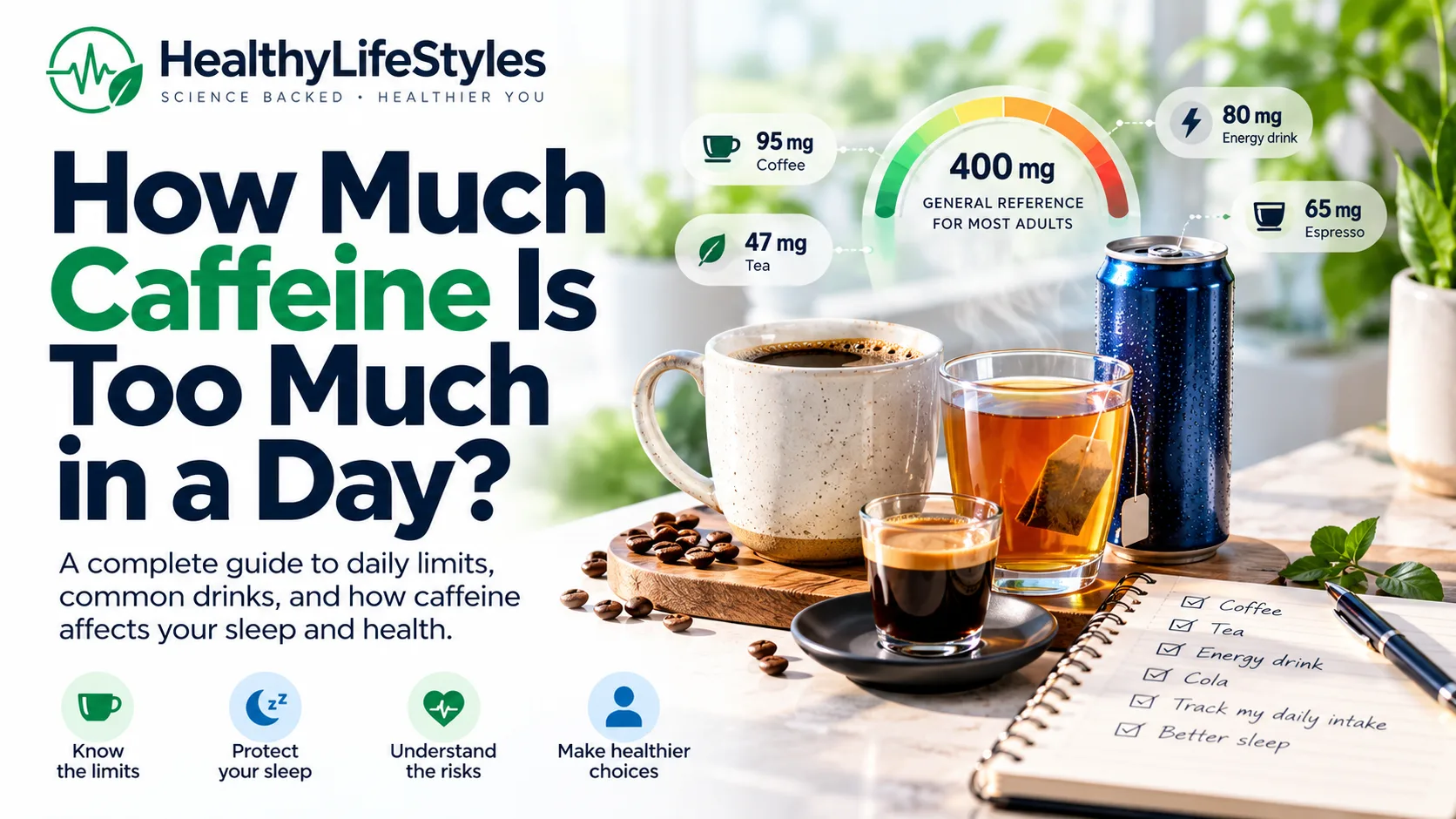
For most healthy adults, up to 400 milligrams (mg) of caffeine across a day is an amount the US Food and Drug Administration does not generally associate with negative effects. But it is not a recommended target, and a smaller amount may disrupt sleep or cause symptoms. The FDA's consumer guidance stresses that sensitivity, medications, health conditions, and how quickly the body clears caffeine all matter. You can first add up your drinks with the Caffeine Intake Calculator.
Counting caffeine works best when you separate three questions: how many milligrams you consumed today, how much you took at once, and when you took it. A daily sum addresses only the first. This guide explains the numbers behind the calculator, the gaps in its presets, and when a general adult reference should not be applied to you.
How Much Caffeine Is Too Much Per Day?
For most healthy, nonpregnant adults, 400 mg a day is a practical population-level reference, not a universal personal safety threshold. The European Food Safety Authority also concludes that intakes up to 400 mg spread throughout a day generally do not raise safety concerns in healthy adults, except during pregnancy. These conclusions concern a healthy population, not someone with an arrhythmia, insomnia, significant caffeine sensitivity, or a medication interaction. See the EFSA caffeine safety assessment.
A daily limit is not the same as a single-dose assessment. EFSA considers single doses up to 200 mg unlikely to raise safety concerns for the general healthy adult population; it also notes that 100 mg near bedtime can affect some people's sleep. That does not mean 200 mg is right for every person, nor that four 100-mg drinks are equivalent to one 400-mg serving in how they feel. Total dose, timing, and individual tolerance are separate considerations.
If you feel jittery, anxious, or unable to sleep after 80 to 150 mg, you have useful information even if your number is far below the population reference. There is no health benefit in trying to reach 400 mg. The aim is to identify an intake that fits your health, alertness needs, and sleep—not to maximize caffeine use.
How Do You Use the Caffeine Intake Calculator?
The live calculator uses six fixed drink presets. Tap the plus or minus control beside each beverage to record how many you had that day. It multiplies the selected count by the preset caffeine amount, adds every drink together, and displays the total in milligrams. Reset returns the counters to zero. There is no custom caffeine-milligram entry field in this version, so the output is an estimate based on those six choices.
- Log each drink by type and quantity; count second cups, refills, and extra espresso shots separately.
- Read the total as a sum for the day, not a measurement of caffeine still circulating in your body.
- Compare the total with the on-screen general 400-mg adult reference, then consider symptoms and bedtime.
- If your specific brand lists a different caffeine content, use that label for your true daily tally rather than treating the preset as exact.
- Remember caffeine from chocolate, certain pain relievers, supplements, or other products is not directly included in these six counters.
The display uses three meaningful positive-intake bands: below 300 mg it shows the general lower-intake status; from 300 through 400 mg it shows an approaching-limit message; above 400 mg it shows an over-limit message. Zero gets a separate empty-log message. The progress bar stops growing visually at the full 400-mg width, even when the number printed above it exceeds 400 mg. That is a presentation choice, not an indication that intake is capped.
How Much Caffeine Is in Coffee, Tea, and Energy Drinks?
Caffeine content varies with serving size, beans, brewing method, steeping time, and formulation. The National Library of Medicine's caffeine guide gives broad ranges rather than one universal amount: an 8-fluid-ounce coffee may contain roughly 95–200 mg, while tea and energy drinks can differ substantially. The figures below are the actual fixed assumptions in this calculator, not verified values for your particular product.
| Calculator selection | Preset caffeine | Important limitation |
|---|---|---|
| Espresso shot | 65 mg | Shot size and blend vary |
| Cup of coffee | 95 mg | Cup size and brew strength vary |
| Large coffee | 200 mg | A large specialty coffee may differ widely |
| Cup of tea | 47 mg | Black, green, and brewed strengths differ |
| Energy drink | 80 mg | Always check the can for total caffeine |
| Cola | 40 mg | Serving size and product matter |
Fixed caffeine values used by the HealthyLifeStyles Caffeine Intake Calculator (estimates, not brand-specific measurements)
A particularly easy mistake is assuming every drink called “coffee” contains 95 mg. A large café coffee might be far stronger, while a small homemade serving could contain less. Similarly, an energy drink is not necessarily an 80-mg product. For precise tracking, note the container size in fluid ounces (fl oz) or milliliters (mL) and check the maker's caffeine statement when available. Caffeine from guarana and other ingredients also contributes to the overall amount.
Does decaf count?
Decaffeinated coffee is generally lower in caffeine, not necessarily caffeine-free. The FDA reports around 2–15 mg in a typical 8-fl-oz decaf coffee. Someone who is very sensitive, pregnant, or monitoring multiple products may wish to include even small amounts. Because the calculator has no decaf preset, add those milligrams separately outside the tool rather than counting a decaf as a regular 95-mg coffee.
Three Worked Examples: 190, 317, and 422 mg
These are hypothetical examples using the actual calculator's fixed numbers. They illustrate addition, not a medical verdict. A person with insomnia might reasonably find 190 mg too much, while a total of 317 mg does not establish that their sleep or cardiovascular response will be unaffected.
| Day | Drinks entered | Arithmetic | Total |
|---|---|---|---|
| A | 2 cups of coffee | 2 × 95 | 190 mg |
| B | 2 coffees + 1 tea + 1 energy drink | (2 × 95) + 47 + 80 | 317 mg |
| C | Day B + 1 espresso + 1 cola | 317 + 65 + 40 | 422 mg |
Hypothetical daily logs calculated from the live six-drink presets
Day A: Two ordinary preset coffees give 190 mg, or 47.5% of the 400-mg adult reference. Day B: Adding a tea and an energy drink reaches 317 mg, about 79% of that reference; the calculator therefore displays its approaching-limit message. Day C: Adding an espresso and a cola takes the day's estimate to 422 mg, about 106% of the reference and into the over-limit category.
Now consider a different scenario: one “large coffee” (200 mg), one standard preset coffee (95 mg), and one energy drink (80 mg) total 375 mg. The estimate is below 400 mg, but a concentrated early-afternoon dose might still be uncomfortable or interfere with sleep. The day's total provides a useful checklist, not a substitute for paying attention to how and when you drink caffeine.
Why Can Caffeine Disrupt Sleep Below 400 mg?
Caffeine promotes wakefulness partly by blocking adenosine signaling. Its effects may persist long after you stop feeling a noticeable buzz, and people differ greatly in how rapidly they metabolize it. A daily intake that fits a population-level guideline may still be poorly timed for your sleep. If your last coffee is late in the day, the clock can matter as much as the milligrams.
In a controlled study of caffeine and bedtime, researchers tested a 400-mg dose taken at bedtime and three or six hours beforehand. Objective sleep measures found disruption even when it was taken six hours before bed. The Drake and colleagues sleep study does not prove every smaller cup will produce the same effect, but it explains why a daily total alone cannot protect sleep.
After logging your daily amount, use the Caffeine Curfew Calculator to explore an estimated cutoff for your desired bedtime; its model uses a roughly five-hour caffeine half-life and an educational residual-caffeine threshold, not a personalized biological test. The related guide on when to stop drinking coffee for better sleep explains the evidence and practical tradeoffs in greater depth.
A different timing problem is a shifting schedule. A late-night worker, a parent with interrupted nights, and a person who sleeps at a consistent 10 p.m. may use the same milligram total very differently. A steady sleep opportunity matters more than choosing caffeine according to a universal “last cup” hour.
Who Needs a Lower or More Individualized Limit?
Pregnancy is a clear exception to the 400-mg adult reference. The UK National Health Service recommends no more than 200 mg per day during pregnancy and reminds readers to count tea, chocolate, soft drinks, and other sources, not just coffee. See NHS guidance on caffeine during pregnancy. People trying to become pregnant or breastfeeding should discuss their situation with their maternity-care team rather than relying on a general tracker label.
Caffeine may also warrant stricter limits or avoidance in people with palpitations, an arrhythmia, elevated blood pressure, persistent anxiety, reflux, or a sleep disorder. Some stimulants, medicines, and supplements can change caffeine's effects or clearance. If any of these circumstances apply, the question is not “How close can I get to 400 mg?” but “What amount, if any, is appropriate for me?” Your pharmacist or clinician can help review the combination.
Children and teenagers should not be assessed against an adult 400-mg reference. The FDA advises against energy drinks for children and teens and notes that caffeine can contribute to palpitations, sleep problems, anxiety, and other adverse symptoms. A dose appropriate for one healthy adult can feel very different in a smaller or younger person. The calculator's status bands are not pediatric recommendations.
For adults with reduced sleep, caffeine can also disguise fatigue without repairing the underlying lack of rest. If your routine regularly depends on late-day caffeine, consider a realistic schedule using the Sleep Calculator and the site's explanation of sleep chronotypes and daily schedules. Those tools are educational scheduling aids, not sleep-disease screening tests.
What Are the Warning Signs of Too Much Caffeine?
Common signs of excessive caffeine for a particular person include jitteriness, tremor, restlessness, anxiety, nausea, an upset stomach, trouble falling asleep, and a racing or pounding heartbeat. Some people notice symptoms at amounts much lower than 400 mg. The printed number should never override a concerning physical response. If a drink reliably causes symptoms, consider reducing or avoiding it and discuss persistent symptoms with a clinician.
Concentrated caffeine powders and high-caffeine products deserve special caution: measuring errors can produce dangerous amounts quickly. Do not assume a supplement is safe because its serving size looks small. In ordinary daily tracking, also distinguish a single unusually concentrated serving from several weaker drinks spread over time. The same total does not imply the same peak exposure or symptom pattern.
When to get medical help Seek urgent medical care for chest pain, fainting, severe or persistent palpitations, seizures, confusion, or serious symptoms after substantial caffeine exposure. Do not wait for a calculator threshold. People who are pregnant, have a heart-rhythm condition, use stimulant medicines, or have significant insomnia should seek individualized advice on caffeine rather than use a 400-mg number as clearance.
How Can You Reduce Caffeine Without a Crash?
If daily caffeine has become a habit, abrupt withdrawal may lead to headache, fatigue, irritability, poor concentration, or sleepiness. The NCBI clinical review on caffeine withdrawal describes this as a recognized, usually self-limited response to a substantial reduction in habitual intake. Reducing gradually may be more comfortable than dropping from several large coffees to zero overnight.
- Record an ordinary week first so you know which drinks contribute the largest share.
- Replace one large drink with a smaller serving or a lower-caffeine option, then reassess before changing another.
- Move remaining caffeine earlier in the day if sleep is the main concern; lower milligrams and earlier timing address different problems.
- Do not replace coffee automatically with an unmeasured energy drink, pre-workout powder, or over-the-counter stimulant.
- Keep meals, hydration, and a consistent sleep opportunity in view; caffeine is not a treatment for chronic sleep deprivation.
People who develop recurrent headaches or significant daytime sleepiness while reducing caffeine may benefit from discussing the pace of reduction and other possible causes with a clinician. Withdrawal symptoms are real, but a headache should not automatically be blamed on caffeine, especially when it is new, severe, or accompanied by neurologic symptoms.
What Can the Calculator Not Tell You?
The Caffeine Intake Calculator is a convenient six-category tally, not a personalized toxicology model. It does not analyze your exact drink brands or sizes, the amount in a supplement or pain medicine, body weight, pregnancy status, genetics, medications, disease history, or the time you drank each beverage. It also does not estimate blood caffeine concentration or diagnose caffeine toxicity. These omissions matter when the general adult reference is not appropriate.
It can still answer a useful everyday question: “How much caffeine might I have consumed from the drinks I remember today?” Use its total to spot overlooked drinks, compare routines, and start a better conversation about sleep or symptoms. If your product label gives different milligrams from a preset, your label-based arithmetic is more relevant. The healthiest number is not necessarily the highest number under the bar; it is the amount compatible with your needs, comfort, and rest.
People also ask
Is 400 mg of caffeine every day safe for everyone?
No. The 400-mg figure describes an amount not generally associated with negative effects for most healthy adults; it is not a recommendation to consume that much. Pregnancy, certain health conditions, medicines, anxiety, and sleep sensitivity can call for a lower amount. Pay attention to symptoms and seek individual guidance when relevant.
Does decaf coffee count toward daily caffeine intake?
Yes, if you are tracking closely. Decaffeinated coffee still contains some caffeine; the FDA reports approximately 2–15 mg in an 8-fl-oz serving. The current calculator does not have a decaf counter, so you would need to add the amount separately when using a label-based daily tally.
Can one 200-mg energy drink be too much?
It can be for some people. EFSA considers single doses up to 200 mg generally not a safety concern for healthy adults, but individual sensitivity varies, and that statement does not apply automatically during pregnancy or with certain medical conditions. Check the actual can label, other caffeine sources, and your response to the drink.
How many hours before bed should I stop caffeine?
There is no single cutoff that fits every metabolism and dose. In one controlled sleep study, 400 mg disrupted objective sleep measures even six hours before bedtime. Starting with an earlier cutoff, using smaller doses, and watching your own sleep pattern is more useful than relying on a daily 400-mg total alone.
What happens when I suddenly stop caffeine?
Regular caffeine users may develop headaches, tiredness, irritability, or difficulty concentrating after abrupt reduction. These symptoms commonly settle over several days, although severity varies. Gradually replacing or reducing drinks can be easier. Seek medical evaluation for unusual or severe symptoms rather than assuming they are always withdrawal.
Sources
- US Food and Drug Administration — Spilling the Beans: How Much Caffeine is Too Much?
- European Food Safety Authority — Caffeine: Safety Assessment (2015)
- UK National Health Service — Foods to Avoid in Pregnancy (reviewed 2026; Caffeine section)
- Drake C, Roehrs T, Shambroom J, Roth T. Caffeine Effects on Sleep Taken 0, 3, or 6 Hours Before Going to Bed. J Clin Sleep Med. 2013;9(11):1195–1200.
- National Library of Medicine — Caffeine. MedlinePlus.